
The Toilet Learning Journey: A Montessori Approach at Cantera
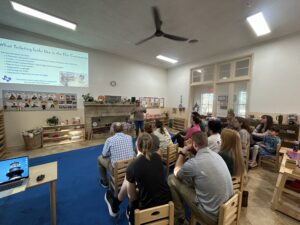
At Cantera Montessori, our recent Parent Education evening focused on one of the most significant transitions in early childhood: the Toilet Learning Journey.
Rooted in Montessori philosophy, toileting is not a milestone to rush. It is a developmental process guided by independence, observation, and respect.
Understanding Readiness
Toilet learning typically aligns with a sensitive period between 12–36 months. During this time, children show growing body awareness and a desire for independence. Signs of readiness may include:
- Interest in the bathroom routine
- Discomfort when wet
- Staying dry for longer periods
- Communicating about elimination
- Wanting to remove their diaper
Montessori described early development as guided by subconscious forces; the horme (inner drive), mneme (absorbing impressions), and nebulae (developing potentials). When children are ready, they approach toileting with interest and joy.
Why Montessori Uses Toileting
In Montessori environments, toileting is approached with collaboration rather than control. Adults:
- Use accurate body terminology
- Move slowly and respectfully
- Invite participation
- Build trust through calm routines
 The goal is not speed. The goal is dignity.
The Role of Observation
Observation is central to this journey. Families were encouraged to:
- Track patterns
- Analyze data for consistency
- Adjust expectations
- Maintain calm, neutral language
Communication between school and home strengthens consistency and supports the child’s success.
Language Matters
Montessori toileting emphasizes respectful, non-evaluative language:
- “You listened to your body.”
- “You went to the bathroom.”
- “You did it.”
Accidents are treated as part of learning, not setbacks. Pressure, rewards, and disappointment are avoided.
Managing Expectations
Toilet learning is gradual. Daytime control usually develops before nighttime dryness. Bowel movements may take longer. Regression during life changes is normal. Extra laundry is part of the process, and even an opportunity for practical life participation.
As we reminded families: Trust the child. Trust the process. Readiness cannot be rushed. Your calm becomes the child’s confidence.
Children First, Always
When we honor the child’s developmental timeline and protect their dignity, we uphold our guiding principle: Children First, Always.
We are grateful to the Cantera Montessori community for partnering with us in creating a peaceful, respectful toileting journey for every child.