Summer Habitats 2026: Discovering the Desert
We have just completed two sunny and fascinating weeks exploring the Desert Habitat! From gritty sand and warm pebbles to clever animal adaptations, our children across all age groups have been discovering how life thrives in hot, dry places through joyful, hands-on Montessori experiences.
Whether they were sprinkling colored sand, building pebble collages, feeling dry vs. wet contrasts, or adding a new layer to their dioramas, every child experienced the desert in ways that matched their age and curiosity.
What Each Age Group Explored in the Desert
Nido (9 months – 2 years)
Our littlest learners enjoyed sensory-rich desert experiences with gritty textures, smooth pebbles, and soft felt cacti. They practiced pebble wiping and sorting, explored desert animal sounds, and added a “Desert Touch” page with sandpaper and cactus fabric to their Sensory Habitat Touch Book. The sunny outdoor hunts and small water contrast play brought big smiles and curious hands.
Pre Primary (2–3 years)
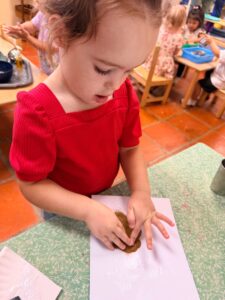 Our toddlers proudly washed and sorted pebbles, matched desert animals to pictures, graded desert textures, and created colorful sand paintings and pebble collages. They enjoyed “Desert Dirt Pudding” and added their special pebble and gritty textures to their Sensory Touch Book. The sunny playground hunts with dry vs. wet play were a highlight!
Primary (3–6 years)
Our Primary children dove deeper with 3-part desert nomenclature cards, pebble wiping and cactus care, teen counting with pebbles, texture grading, desert biome map work, and studying adaptations and food chains. They created sand paintings and warm-toned pebble sunset collages on the art shelf, enjoyed Desert Dirt Pudding and Dry Fruit Mix, and added rich 2-page spreads to their “My Habitats Adventure Book.”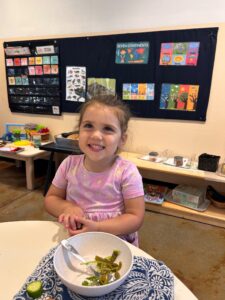
Kindergarten (5–7 years)
Our Kindergarten students took on leadership roles while following the Primary curriculum. They conducted sunny shadow tracking and drought-resistant planting projects, built detailed desert food chains and adaptation studies, worked on their Habitat Journals with more writing and reflection, and added a desert layer to their shoebox dioramas. They also enjoyed reading desert stories to their younger reading buddies.
Highlights from the Desert
- Children collected real pebbles and observed dry vs. wet sensations during outdoor time.
- The classrooms felt warm and sandy with beautiful sand paintings and pebble collages on display.
- Everyone contributed to their personal keepsake book or diorama with gritty textures and clever adaptations.
- Teachers observed growing scientific thinking, richer desert vocabulary, and beautiful moments of teamwork and perseverance.
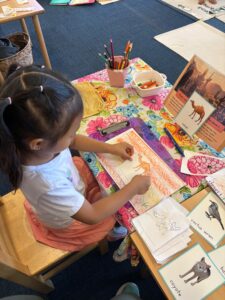 The desert has taught us about resilience, clever adaptations, and how life can thrive even in challenging conditions.
Next up: We journey into the lush and colorful Rainforest Habitat! We can’t wait to explore bright flowers, layered canopies, and “rain” play with all our students.
Thank you to our wonderful families for your partnership this summer. We encourage you to continue the desert exploration at home; go on a rock hunt, feel how warm and dry the stones are, and talk about what might live in a hot, sandy desert!
Be sure to check out Transparent Classroom for all your child’s latest photos.